
“With an expanded total addressable market of $225 billion, we have significant runway for growth... Tractor Supply has never been stronger and the next five years are going to be very exciting.” – Hal Lawton (President and CEO)
Founded in 1938 as a mail-order catalog for tractor parts, Tractor Supply Company has grown into the largest rural lifestyle retailer in the United States, with more than 2,600 stores across 49 states.
What began as a niche supplier to farmers has evolved into a retailer serving a broad and growing base of customers living what the company calls the “Out Here” lifestyle.
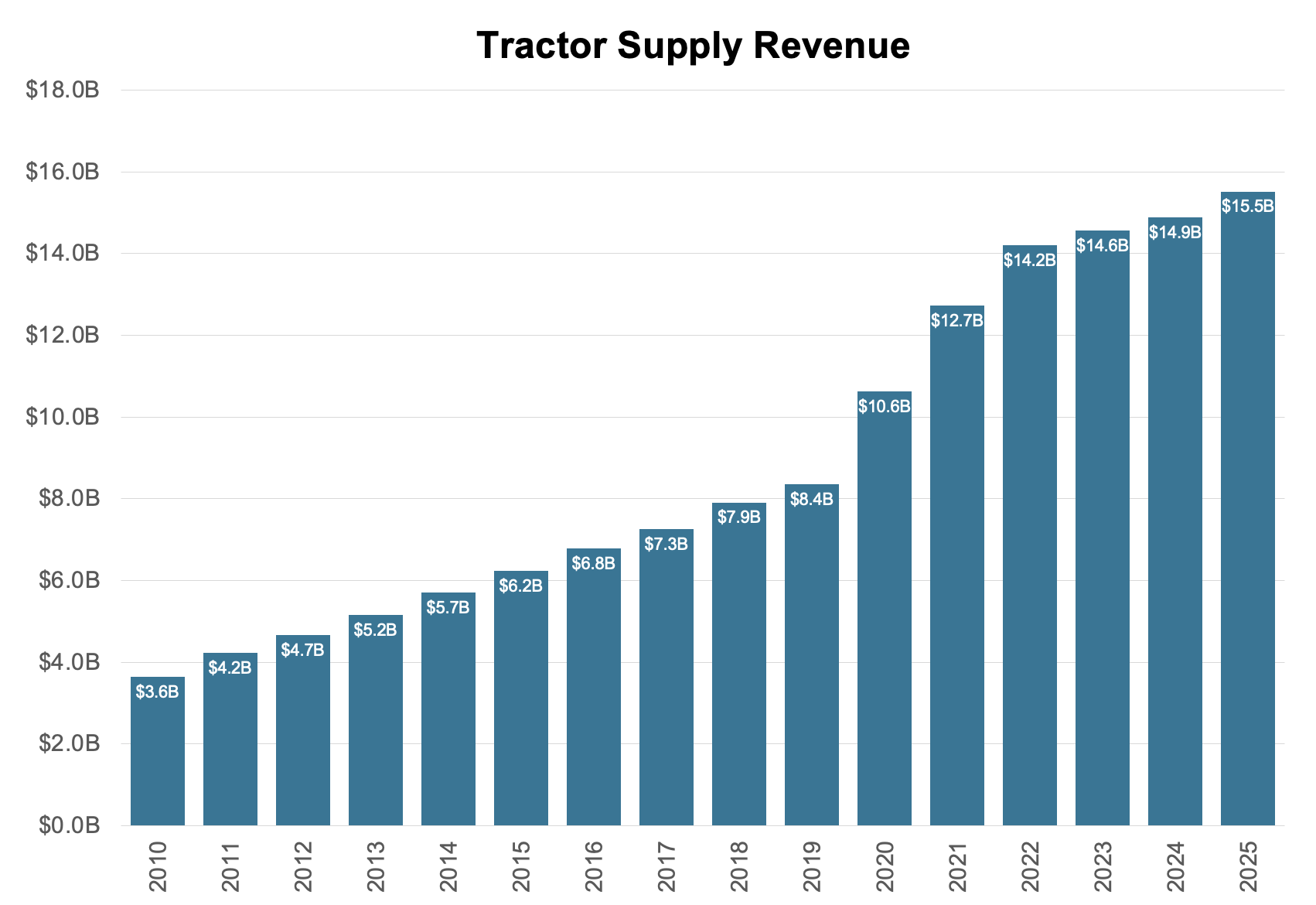
Over the past several decades, that positioning has translated into remarkable consistency. Tractor Supply has delivered more than 30 consecutive years of revenue growth, reaching approximately $15.5 billion in sales in 2025.
A Rural Distribution Engine, Not a Retailer
Tractor Supply is a rural lifestyle retailer serving customers in small towns and communities outside major metropolitan areas.
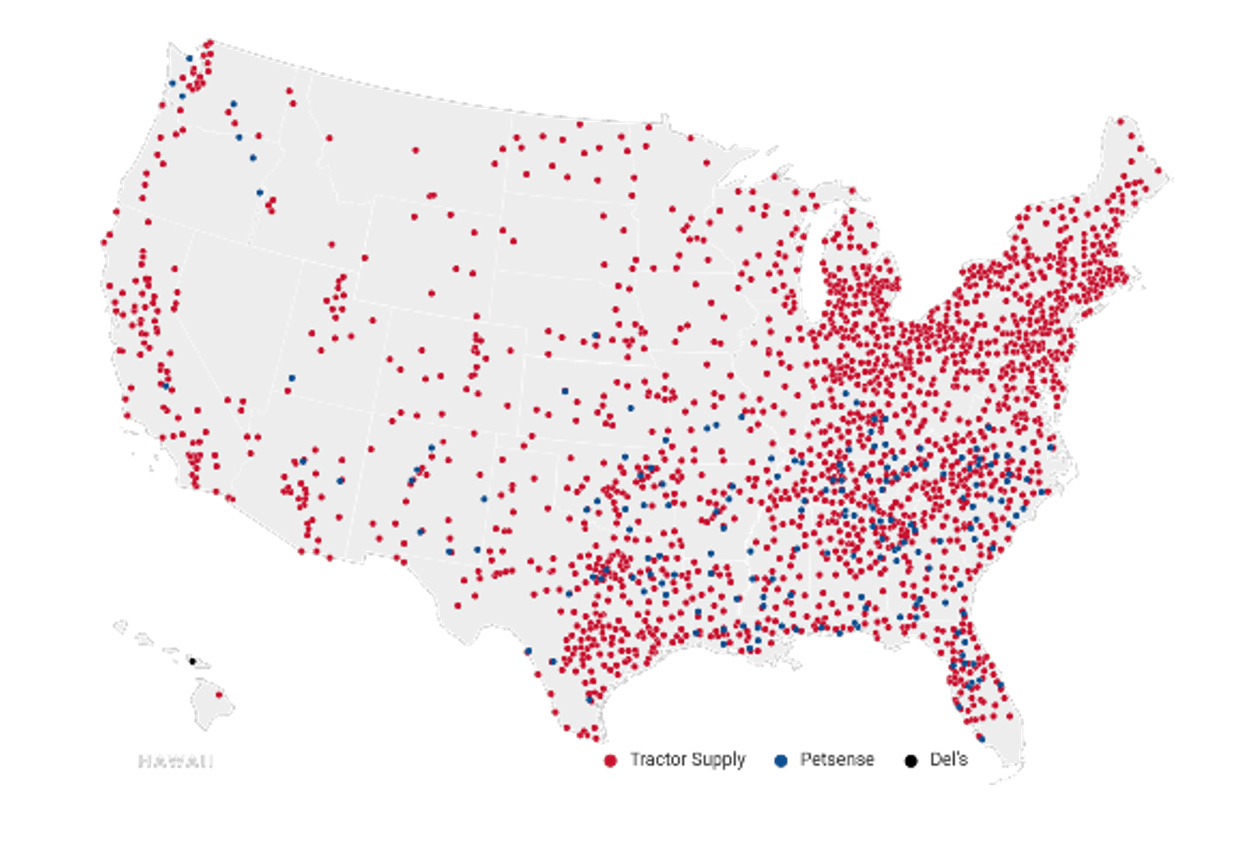
Its core customer includes recreational farmers, ranchers, tradesmen, and pet owners living what the company calls the “Out Here” lifestyle. These customers have practical, recurring needs, ranging from livestock feed and pet food to fencing, tools, and hardware.
While it appears to be a traditional retailer, the business is better understood as a specialized distribution system. The company operates a purpose-built supply chain, including 11 distribution centers and dedicated mixing and import facilities, designed to efficiently move bulky, high-volume, and needs-based consumable goods.
Revenue is generated through the sale of physical goods across its store base and digital channels, with sales diversified across key categories including livestock and agriculture, companion animals, seasonal and outdoor products, tools and hardware, and apparel.
From Cyclical Retail to Recurring Demand Engine
The durability of Tractor Supply’s business is not an accident, it is the result of a deliberate shift in what the company sells.
Over the past decade, Tractor Supply has steadily reoriented its product mix away from cyclical, discretionary categories like hardware and tools, and toward highly recurring, needs-based consumables. That shift is the single most important reason the model has become more resilient over time.
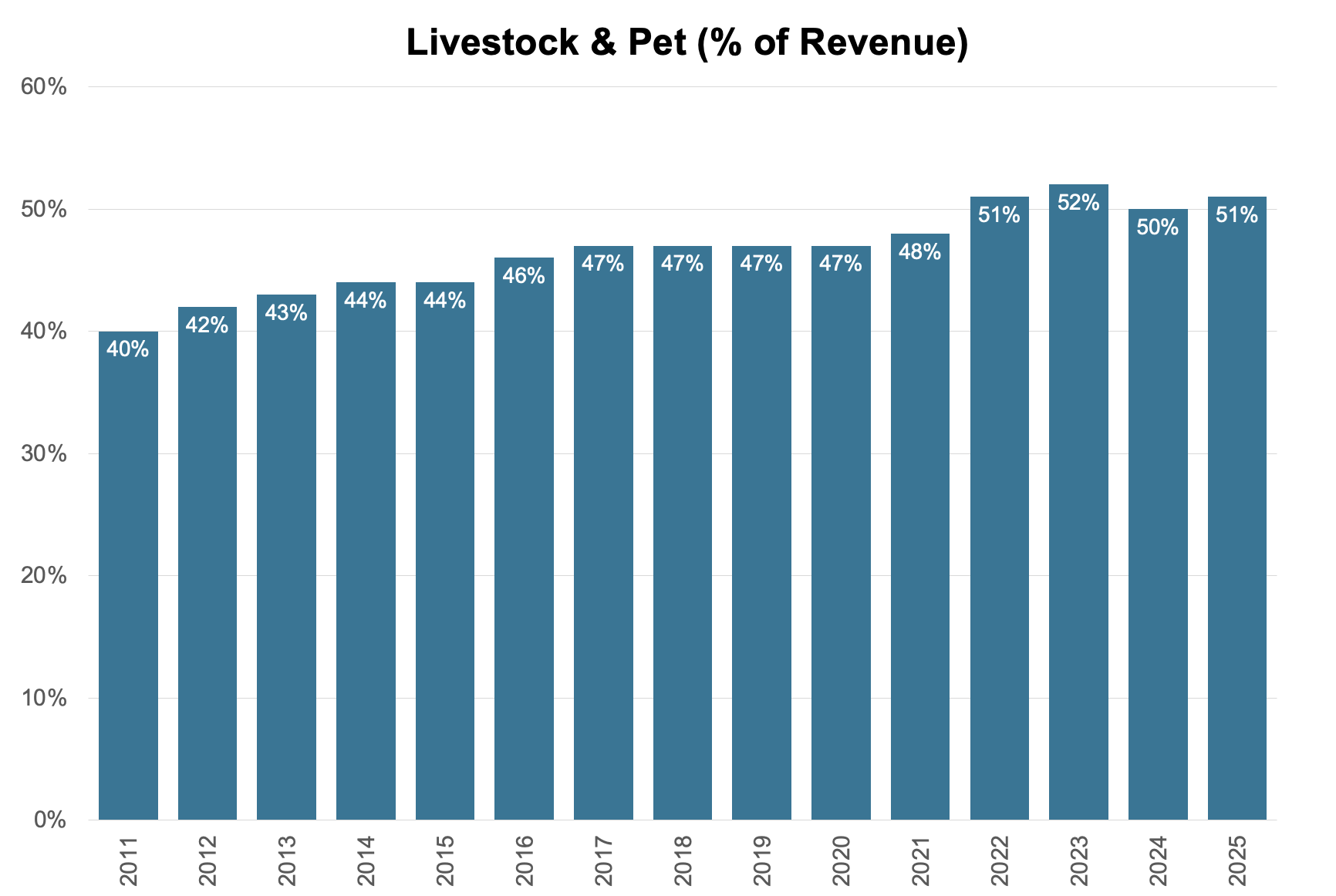
The clearest example is the rise of animal-related categories. In 2011, livestock and pet products accounted for roughly 40% of total sales. By 2015, that figure had increased to 44%, and by 2022 it reached 50%. Today, under the company’s updated reporting structure, those categories represent approximately 51% of revenue, split between livestock and agriculture (27%) and companion animals (24%).
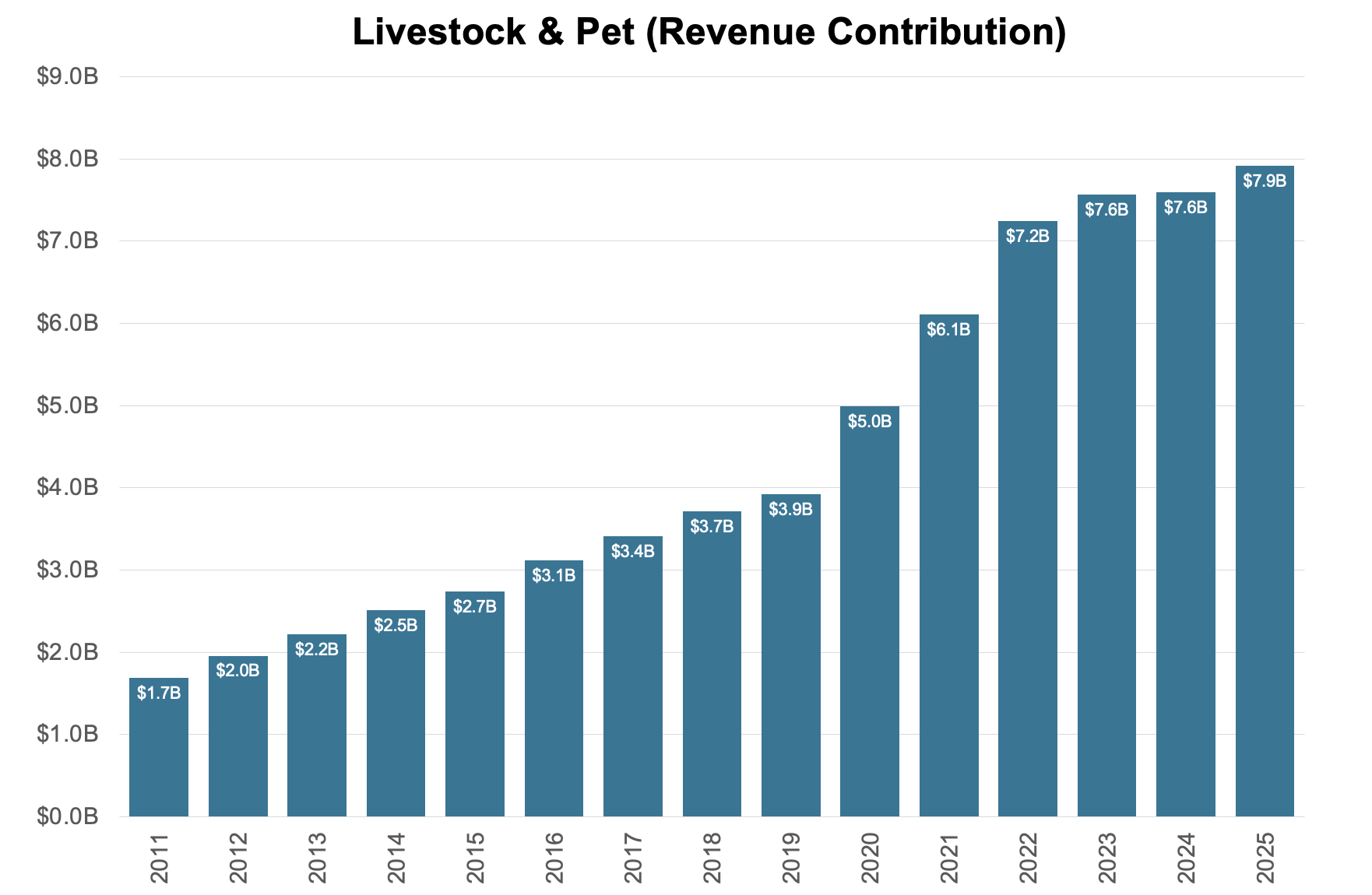
This matters because these products behave differently than traditional retail. Livestock feed, pet food, and other consumables are not discretionary, they are replenishment items. Customers do not delay these purchases. As a result, these categories drive consistent traffic, predictable revenue, and a level of demand stability that most retailers do not have.
