
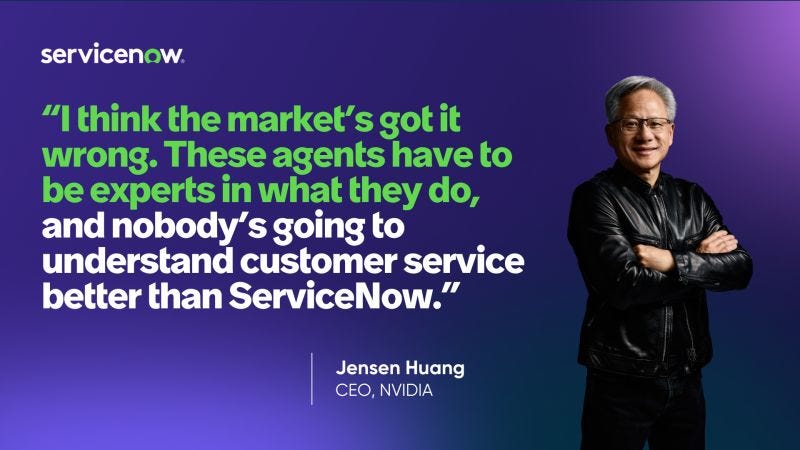
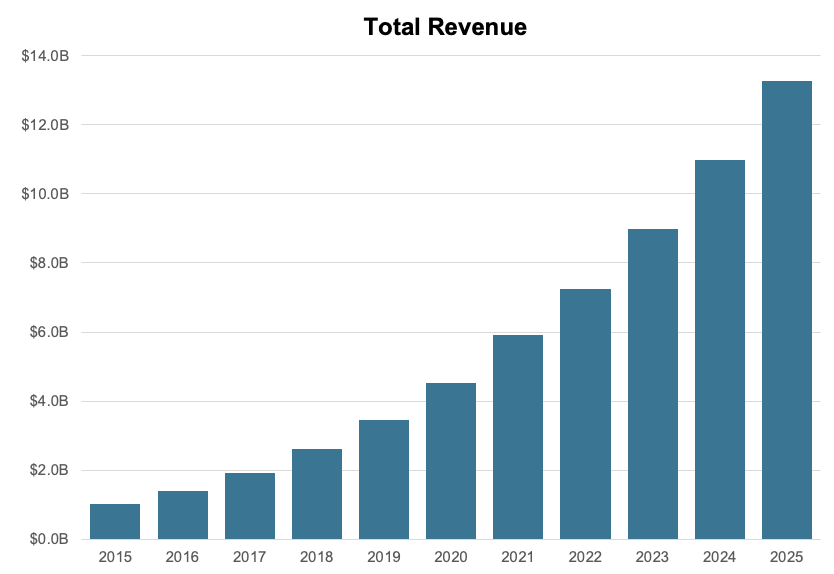
ServiceNow (NOW) has compounded revenue at ~20% for over a decade, with best-in-class retention and steadily expanding margins. By any traditional SaaS metric, NOW is a high-quality compounder.
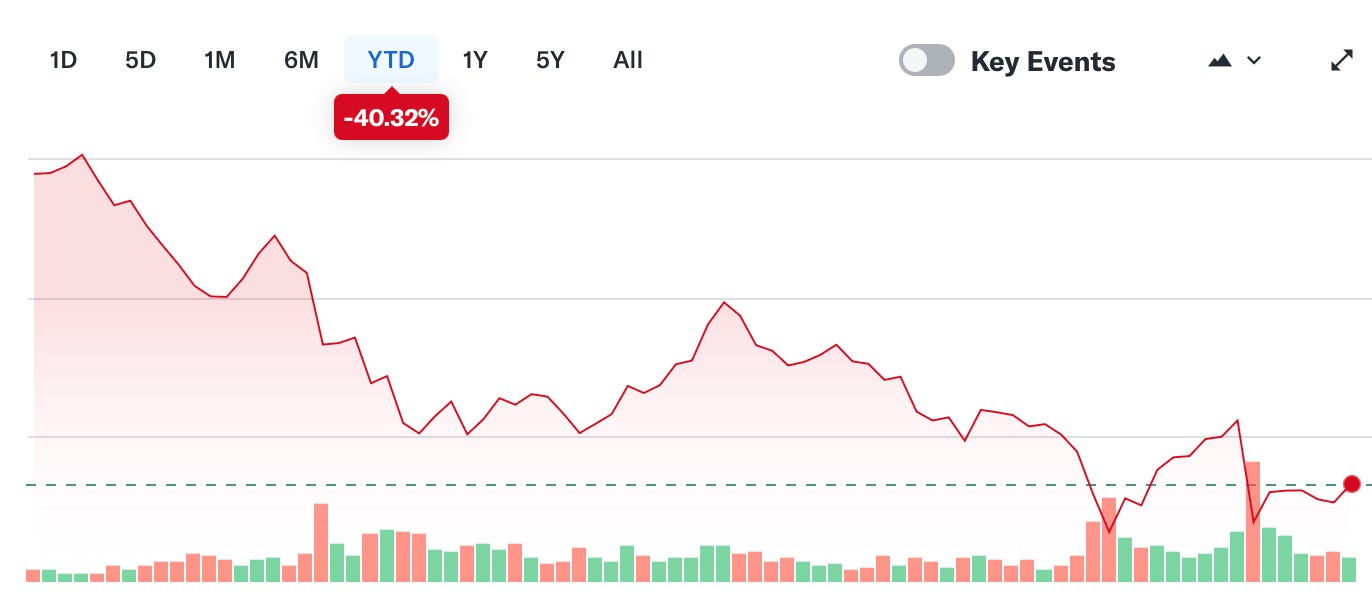
And yet, following its Q1 2026 earnings—where the company beat expectations and raised full-year subscription guidance to ~$15.7 billion (~21% constant currency growth)—the stock sold off sharply, now down more than 40% year-to-date.
At the center of the selloff is a simple but critical question:
Does AI break the SaaS seat model—or does it make orchestration platforms like ServiceNow more valuable?
If AI compresses seat-based pricing, the economics of the model change. If it expands the value of orchestrating work across the enterprise, ServiceNow may be better positioned than ever.
The Business
While companies like Salesforce and Workday function as “systems of record” (massive databases storing customer or employee information), ServiceNow operates as a system of action. It sits above a company’s fragmented software stack, acting as the connective tissue that coordinates how work actually gets done.
The example/workflow below illustrates the point. Hiring a new employee isn’t a single action, it’s a sequence:
IT provisions a laptop and software licenses
HR sets up payroll and benefits
Security grants badge access and network permissions
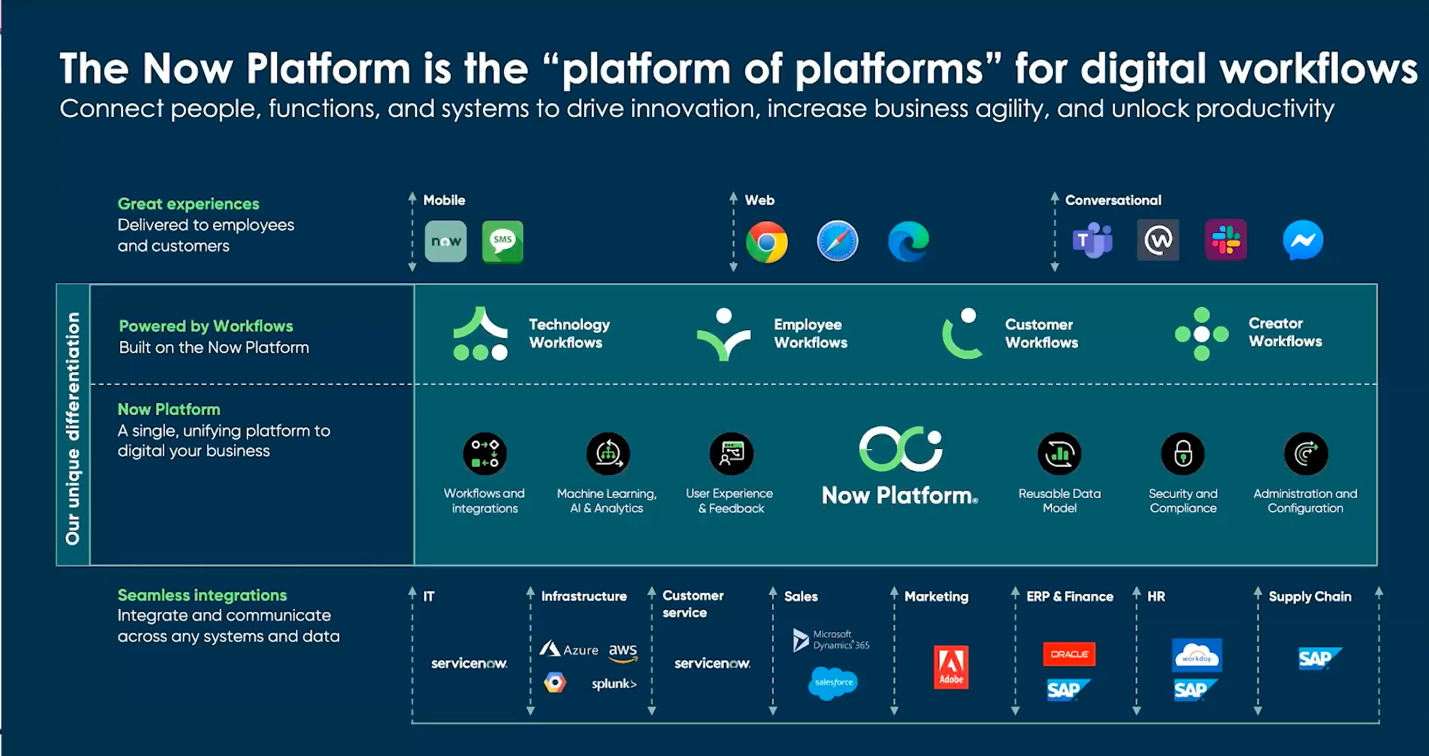
Without an orchestration layer, this process becomes a mess of emails, Slack messages, and manual handoffs, a slow, expensive drain on enterprise productivity. Each step lives in a different silo. ServiceNow stitches them together, using automated integrations to ensure tasks move across departments without friction.
This positioning, sitting between systems rather than competing with them, is what makes the model so powerful.
To understand why this is increasingly important (and defensible in an AI world), it helps to frame ServiceNow within the enterprise data stack.
The lower layers (compute, storage, even AI reasoning) are rapidly commoditizing as inference costs collapse. But ServiceNow has anchored itself at the very top of the stack:
Layer 6: Action & Orchestration — triggering workflows across hundreds of systems
Layer 7: Governance & Identity — permissions, audit trails, compliance logic
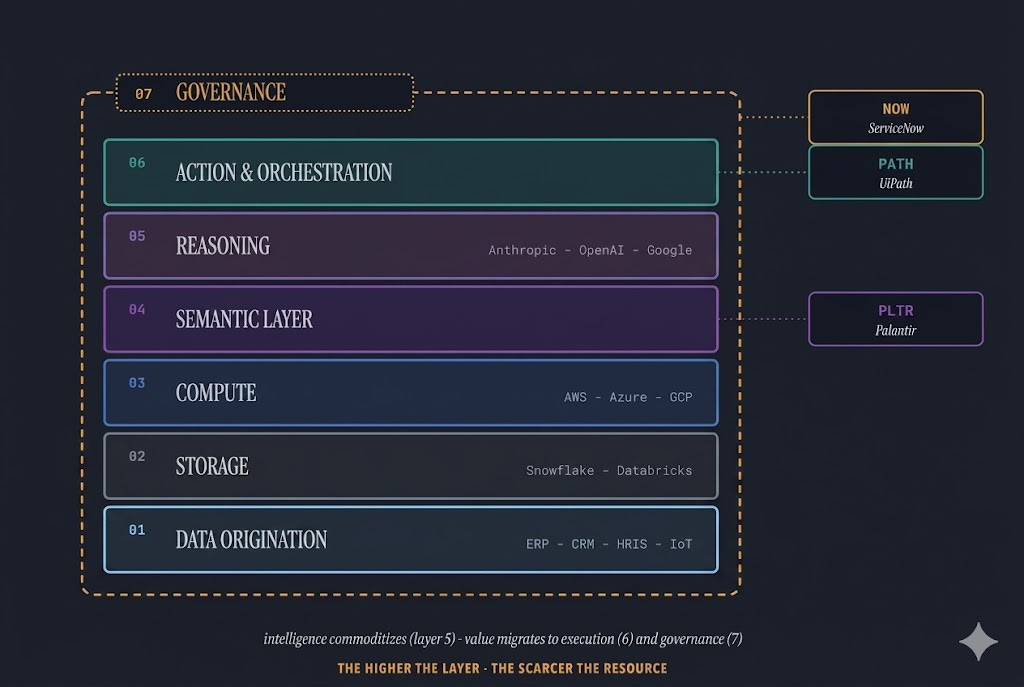
This is where the real leverage sits. An AI model can tell you how to provision a laptop. But it doesn’t know who has budget approval in the Berlin office, which cost center to charge, or what security clearance is required. That context built over years of configuration, policy, and usage—is embedded inside ServiceNow; that’s the moat.
